


History
- Inicio
- Historia
History of the Concello de A Arnoia
Origin of the word "Arnoia"
We will begin with the origin of the word “arnoia”, about which there is a diversity of opinions. For Murguía in “História de Galiza”, its origin comes from the Sanskrit arna (river). According to Santiago y Gómez it has a different origin, as Padre Samuel Eiján puts it:
Historical events in Arnoia
As we will see in this summary, the history of our municipality follows the great general milestones of the history of Galicia.
The occupation of our territory dates back at least to the Castro (hillfort) period, of which there is evidence. The passage of the Romans through Arnoia also left its mark, in the form of archaeological remains. In the Middle Ages, under the protection of the monasteries, several writings referring to the lands of Arnoia already existed. The Inquisition was also present in Arnoia, as were the French, who passed through these lands, and the Carlist bands. All of this was well documented thanks to, among others, the writings of Padre Samuel Eiján.
We can therefore, based on the archaeological remains found and the existing writings, distinguish the following periods in the history of Arnoia:
- Castro-era Arnoia
- Roman Arnoia
- Arnoia in the Middle Ages
- The Inquisition in Arnoia
- The French in Arnoia
- The Carlists in Arnoia
Documents of interest
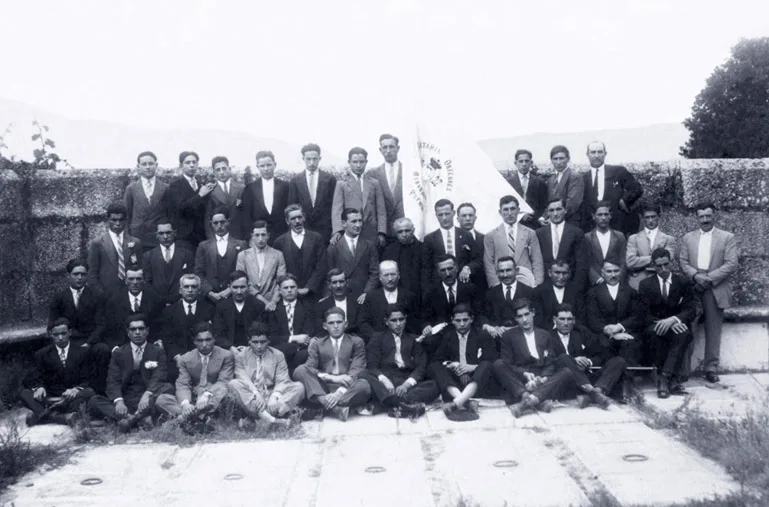
Photo of the Arnoia “orfeón” (choral society), called “Airiños da Aldea”, from 1929, portrayed after winning a choral championship in Ribadavia, in which figures can be seen such as “O Cartelle”, the parish priest D. Emilio, Rodrigo (the singer) from Sendin, o Guntín do Bacelo and others of the time whom the older residents will be able to recognise.