


Monuments
- Inicio
- Monumentos
Monuments
On such a limited area, it is only logical that there should not be a large built heritage, which does not mean that it is not distinctive or, if you like, peculiar.
Religious architecture
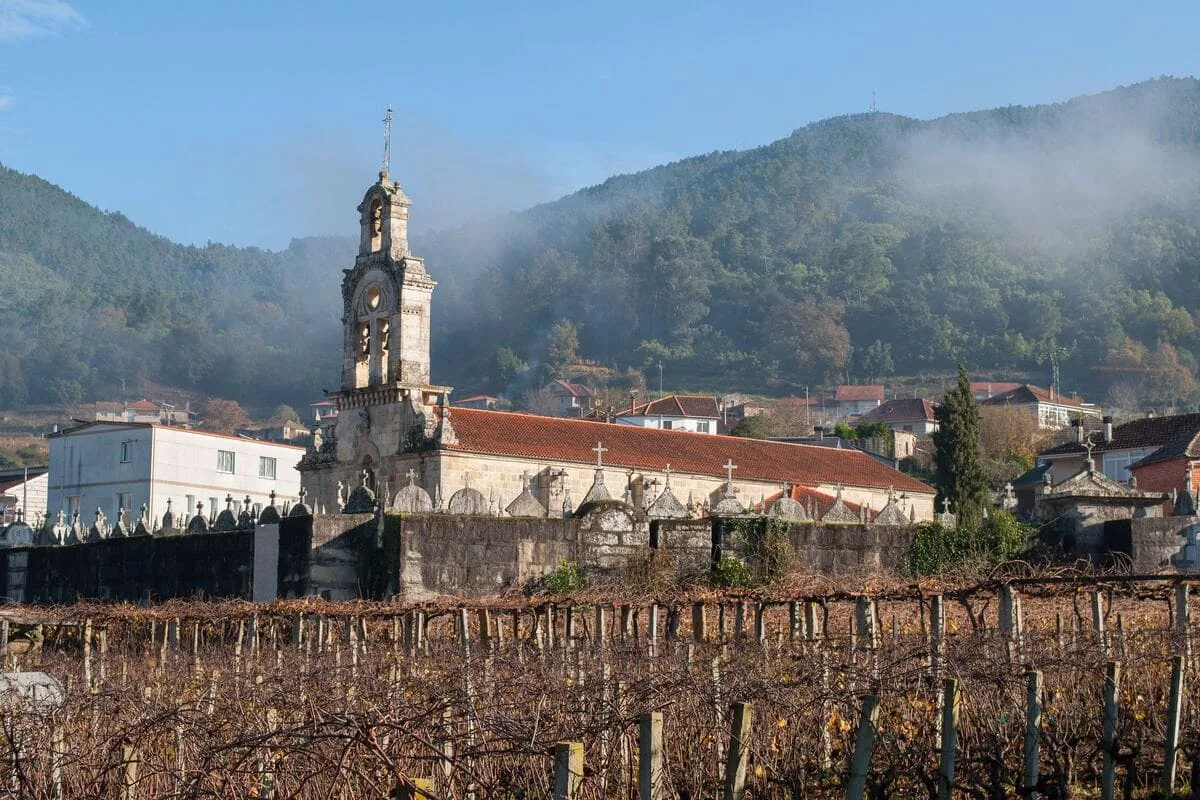
Among the religious buildings, we highlight the parish church of San Salvador, founded in 1612, a date engraved on the façade. Its altarpiece, of vernacular construction, is the work of a local carpenter. The church features a beautiful Romanesque window, apparently from the chapel that previously stood on the same site. Inside there are two coats of arms, one of them belonging to a familiar of the Inquisition.
Nearby stands the rectory, a former Priory that was dependent on the monastery of Celanova; it bears the arms of the abbey founded by San Rosendo: the cross, the compass and the mirror.
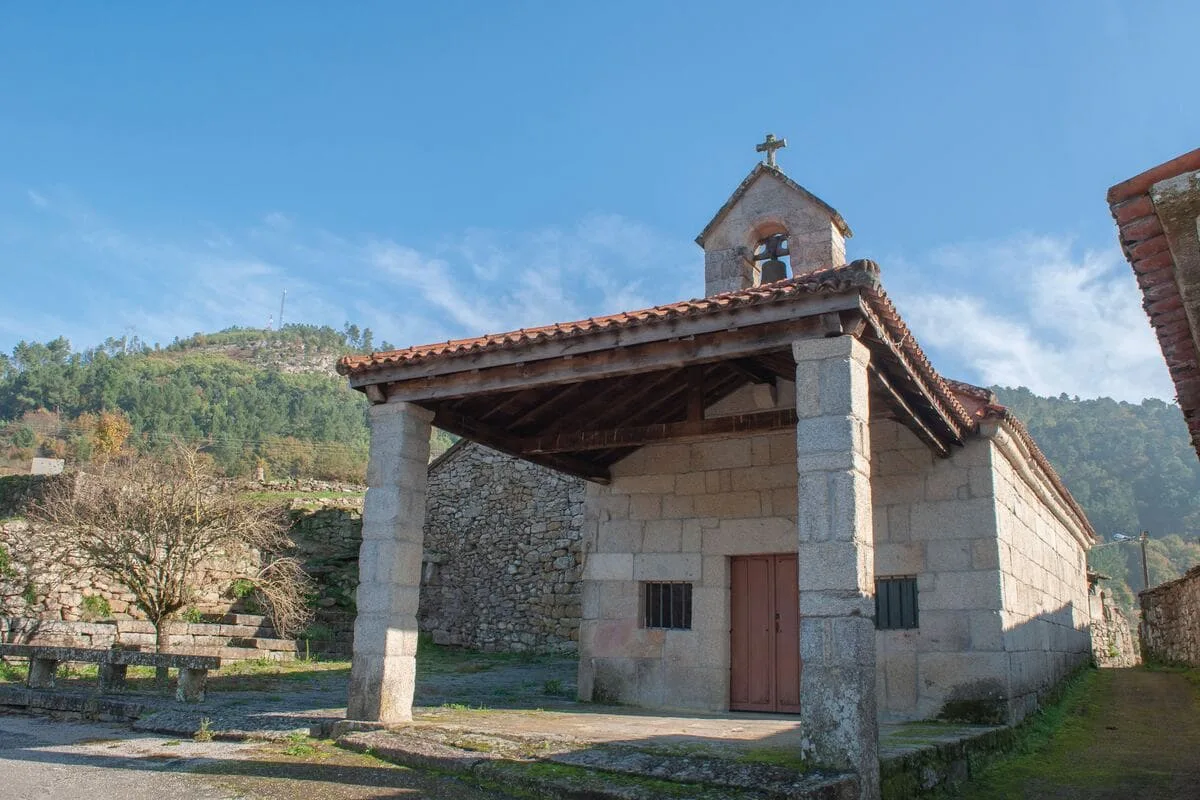
Continuing with religious architecture, the municipality has various chapels of different dates, thus we have: San Roque, or San Vicente, 18th century, Nª Sª da Asunción in Lapela; San Antonio in Remuiño; San Amaro in the village of the same name, 12th and 15th centuries, with a stone vault in the Romanesque-style presbytery. At this same site, the existence of a former convent is speculated, and finally San Miguel, a vernacular chapel in a beautiful setting filled with vegetation where ancient oaks abound. A pilgrimage festival is held that brings together people from four parishes in early May.
Vernacular architecture
Also present are the stone crosses (cruceiros) and souls’ shrines (petos de ánimas). Of the former, there are examples in the atrium of San Salvador; in Pumar, a vernacular one from the 18th century, and in San Roque, from the 19th century. As for the souls’ shrines, those of Porqueira, San Amaro and Reza are worth mentioning. All of them of vernacular construction.
Before moving on to the description of civil architecture, it is worth mentioning the archaeological sites, places and finds belonging to ancient historical periods. From the Castro culture period we can cite the sites known as “A Cibdade” in Carnós and “O Castro” in Lapela, although visual observation suggests that a proper survey could increase the number of settlements. In Sendín, two Roman altars were found, possibly from the 2nd century; they are votive and dedicated, one to Jupiter and the other to the Sun. There was a third, anepigraphic one, roughly dressed on two of its faces, which served as a shrine dedicated to San Amaro. The first two were deposited in the Museo de Artes e Costumes Populares do Ribeiro, in Ribadavia.
In the section on historic civil architecture, there are notable buildings such as the Casa do Inquisidor in Remuiño, which bears a coat of arms with the arms of the Inquisition; the casa dos Valdés in Outeiro Cruz, with the heraldic shield of the Armada, Araújo, Losada and Inquisition; the casa dos Uxía in Quinteiros, with two coats of arms; in Lapela the casa de “A Señora”, also with two coats of arms, the first bearing the arms of the Sarmiento, Armada, Araújo and Feijóo, and the second the roundels of the Castro; and finally the casa de O Rial, 18th-19th centuries.
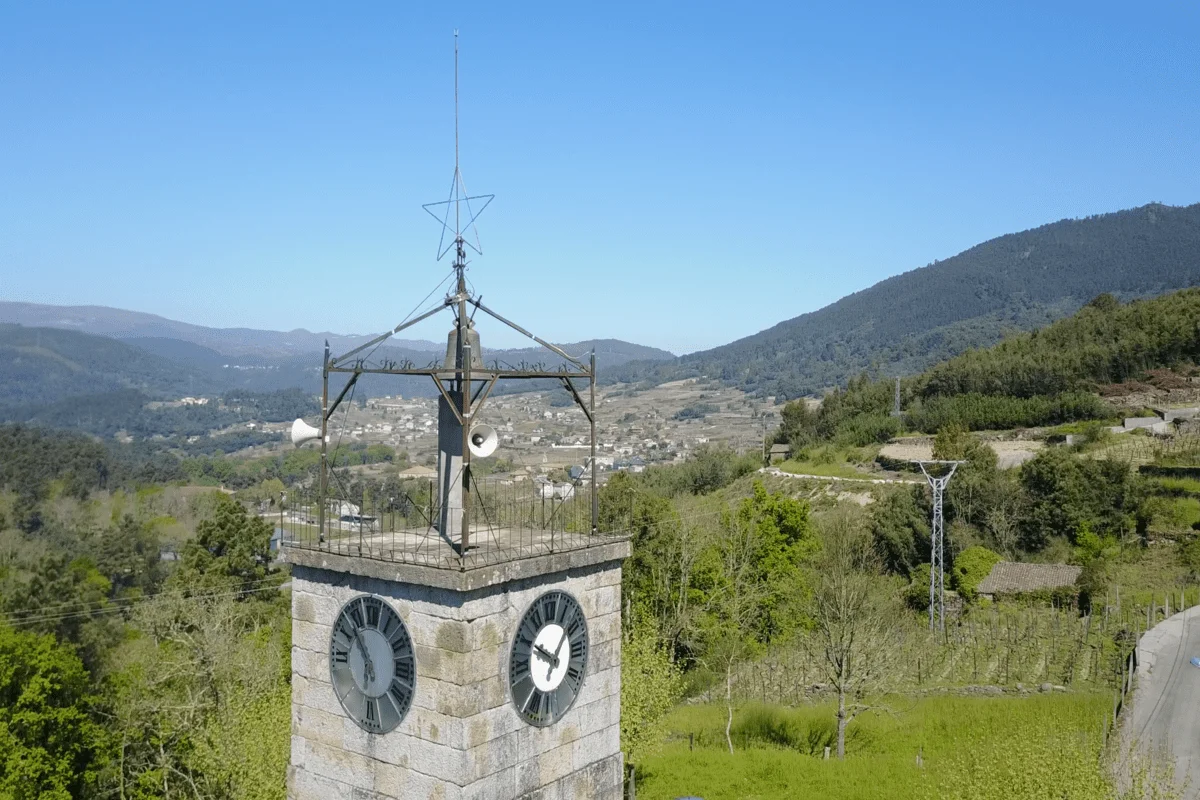
Special mention is deserved by the graceful torre do reloxo located in San Roque. It is a 20th-century work and was donated to the town by the “Sociedad Arnoia” of residents in Uruguai in 1940.
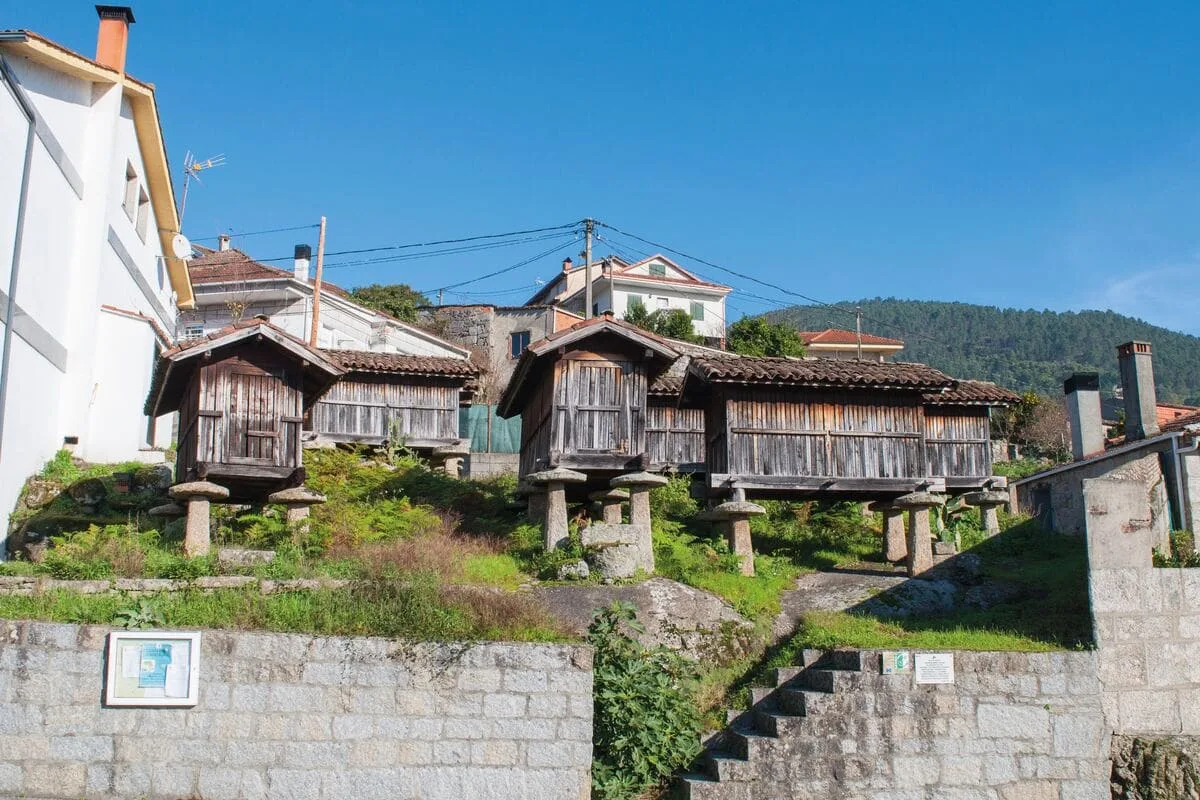
This list is completed by the odd dovecote, typical rural buildings, and the occasional fountain.